


Pneumatic Cylinder Selection Guide: Match Cylinder Types According to Working Conditions
pneumatic cylinder selection There is no one-size-fits-all standard for selecting pneumatic cylinders in automated equipment. The choice of cylinder must be based on actual working requirements, on-site operating conditions and installation space. Different working environments, precision standards and operating modes require different types of pneumatic cylinders. Proper cylinder selection is key to stable equipment operation, fewer breakdowns and longer service life for automated machines.
Each type of pneumatic cylinder is designed for specific industrial scenarios. For applications that need smooth stroke end movement with no mechanical impact and no loud collision noise, air cushion cylinders are the most practical option. Widely used in factory automation, these buffered cylinders effectively offset inertial force at the end of each stroke, ensuring quiet and steady machine operation.
Light-duty cylinders are ideal for lightweight equipment and low-load tasks, such as simple pushing, lifting and resetting movements. They feature a simple structure and low weight, helping reduce overall equipment load. For machines with limited installation space and short stroke requirements, compact thin cylinders are the best fit. Their ultra-slim size saves mounting space and fits well in highly compact automated systems.
Standard cylinders are prone to shaft offset, jamming and wear when bearing lateral loads. In contrast, guided pneumatic cylinders can withstand side force steadily and keep linear movement accurate. For precision processing and sorting equipment that demands strict positioning and braking accuracy, lockable cylinders are the top choice. They deliver instant locking and precise positioning to avoid processing errors.
Some automated processes require fixed piston rod angles without rotation to prevent workpiece misalignment and assembly errors. For these cases, non-rotating shaft cylinders are the perfect solution. Beyond standard working scenarios, special operating environments demand targeted cylinder selection instead of blind parameter matching.
High-temperature resistant cylinders are necessary for heat-intensive working environments like thermal baking and hot processing, preventing seal aging, material deformation and power loss caused by high heat. Corrosion-resistant pneumatic cylinders work reliably in humid, chemical and acid-base environments to avoid erosion damage. For dusty and debris-filled working sites, installing a dust cover on the piston rod end effectively blocks impurities and protects internal cylinder parts. In food and pharmaceutical production that requires high cleanliness and zero pollution, oil-free pneumatic cylinders are the optimal choice, as they produce no oil leakage and meet clean production standards.
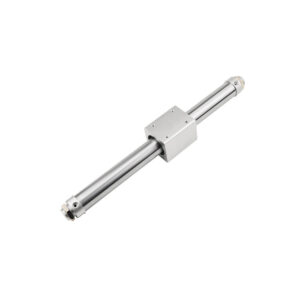
A variety of special pneumatic cylinders cover refined industrial working conditions. Rotary cylinders handle angle rotation and workpiece flipping tasks. Rodless cylinders offer high stroke utilization and suit long-stroke pushing in narrow spaces. Pneumatic grippers are core components for automated material picking, clamping and sorting. Mini cylinders and pin cylinders feature tiny sizes, perfect for fine adjustment and short-stroke operations on miniature automated equipment. All these cylinder types serve unique functions and cover most pneumatic automation scenarios.
Most technicians focus on basic indicators including cylinder specifications, model sizes and materials during selection. However, two critical factors that greatly affect cylinder stability and durability are often overlooked: connection methods and sealing structures.
The cylinder connection mode determines the maximum bearing working pressure, installation firmness and daily maintenance difficulty. Meanwhile, the sealing system is the core defense against air leakage and cylinder failure. In actual selection, technicians should match suitable connection structures and sealing parts according to on-site pressure, installation methods, working frequency and ambient conditions. This practice keeps pneumatic cylinders safe, efficient and low-fault, maximizing the overall performance of pneumatic automation equipment.
Pneumatic Cylinder Selection Guide: Match Cylinder Types According to Working Conditions
Add comment