

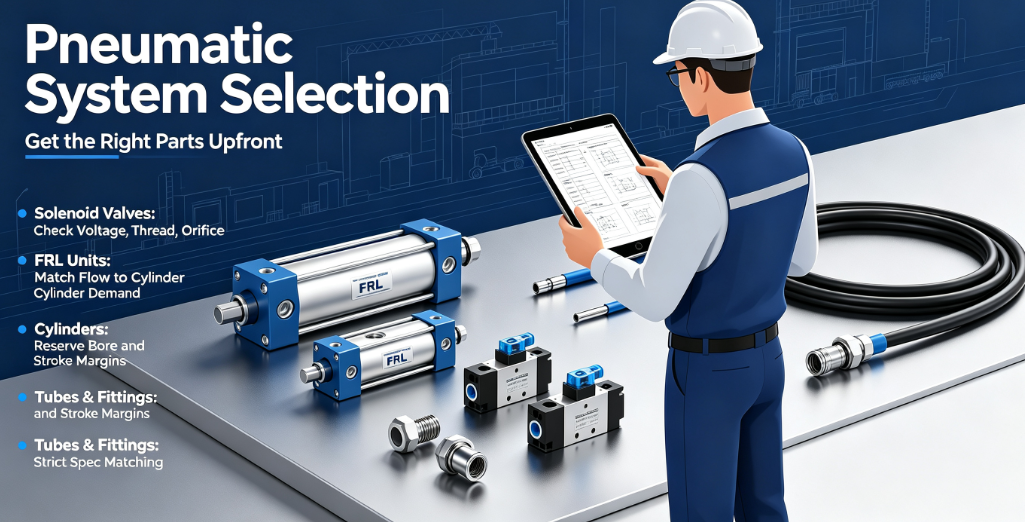
Pneumatic Components Purchasing Pitfall Avoidance Guide: Solenoid Valves, Air Service Units and Cylinders – The Three Most Problematic Areas
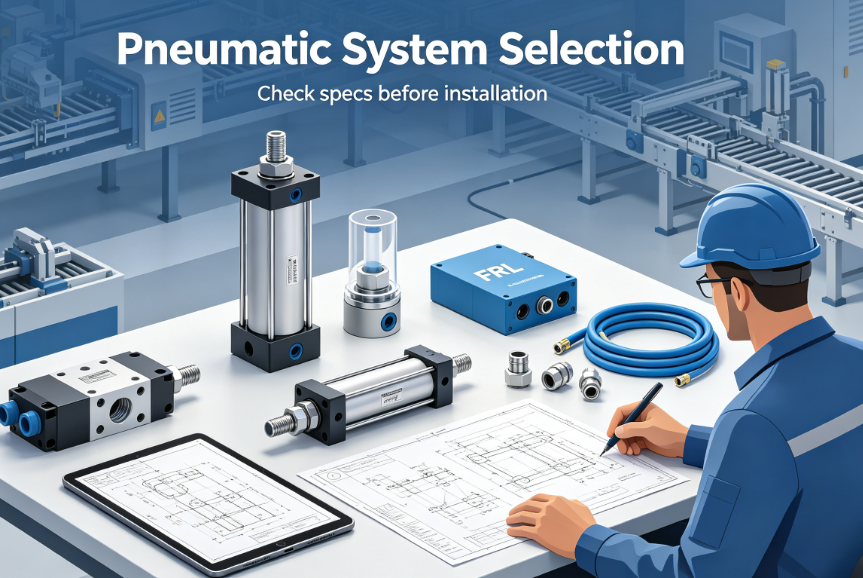
Pneumatic Components Purchasing Pitfall Avoidance Guide out on the production shop floor, yet malfunctions can be extremely troublesome. Solenoid valves fail to actuate, cylinders run underpowered after FRL units are installed, and air tube fittings leak everywhere. Once these issues emerge, maintenance technicians spend hours troubleshooting, only to discover the root cause: improper component selection at the time of purchase.
I. Solenoid Valves: Voltage and Air Ports Are the Two Most Frequently Misconfigured Parameters
Solenoid valves are the most frequently replaced parts in pneumatic systems and also where buyers run into the most purchasing pitfalls. Two issues occur most commonly.
Incorrect voltage connection. Many factories use 220VAC solenoid valves, yet 24VDC valves are often fitted on-site. Mismatched voltages render the purchased valves incompatible for installation, and replacements lead to costly delays. Such basic mistakes frequently occur at numerous small manufacturers, rooted in a failure to confirm voltage ratings with technical teams before placing orders.
Incorrect air port specifications. Solenoid valves are available with various thread specifications such as G1/8, G1/4 and G1/2. Wrong thread selection prevents installation, which leaves buyers with no option but to return the goods or reorder.
Another lesser-known difference: pilot-operated solenoid valves require an air supply to switch properly. In contrast, direct-acting valves can retain a certain pressure even if the air supply is accidentally cut off. These two types function differently. Mixing them up will result in incorrect cylinder operation logic. A lithium battery equipment manufacturer encountered this problem and identified the root cause only during commissioning.
Procurement recommendation: Confirm three key parameters with technical personnel before ordering: voltage, air port thread specification and orifice size. Follow technical drawings if available. If drawings are not accessible, clarify all details with photos before purchase.
II. Air Service Units (FRL Units): Often overlooked, yet their importance only becomes clear once faults occur.
Water separator filter, pressure regulator and lubricator are commonly known as FRL air service units. They are indispensable pre-treatment devices for pneumatic systems. Treating them as secondary components and purchasing low-grade alternatives for makeshift use will lead to premature failures of the entire system.
The pressure regulator is the component most prone to faults.
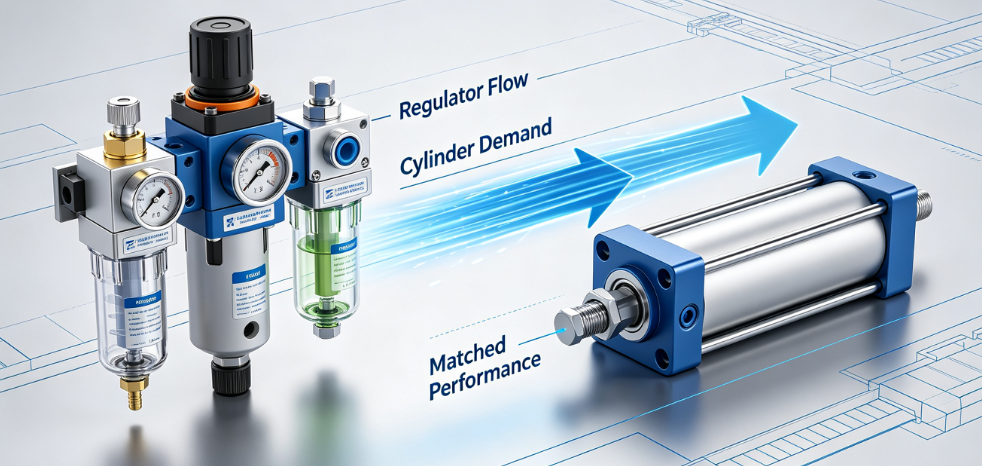
Two parameters must be considered when selecting a pressure regulator: maximum working pressure and flow rate. If the chosen regulator delivers insufficient flow, the cylinder will move noticeably slower. An automation equipment manufacturer encountered this exact issue. They purchased the cheapest available regulator, yet the cylinder speed remained incorrect. After one week of troubleshooting, they finally identified the root cause.
Another common issue with FRL units: many factories purchase components separately. They source the air filter, pressure regulator and lubricator from different brands. Assembling mismatched parts leads to inconsistent specifications and creates major inconvenience during maintenance and replacement. It is recommended to buy complete FRL sets from the same brand and series for unified specifications, which greatly simplifies future maintenance work.
Procurement recommendation: Purchase complete FRL sets from the same brand. For pressure regulators, focus on verifying whether the flow rate meets cylinder requirements instead of prioritizing low cost alone.
III. Cylinders and Air Tube Fittings: Overlooked Details Cause Frustrating Air Leakages
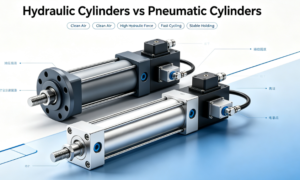
Cylinders and air tube fittings may appear to be standard parts, yet they involve many technical nuances.
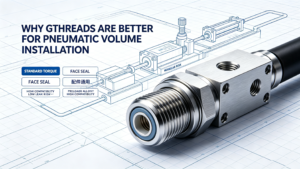
The specifications of pneumatic tubes and fittings must match. Pneumatic tubes come in multiple outer diameter sizes including 6 mm, 8 mm, 10 mm and 12 mm, and fittings must be selected accordingly. Some factories fail to carefully check thread specifications when purchasing tubes and fittings. As a result, the parts either cannot be threaded together, or they leak even after assembly. In severe cases, the efficiency of the air circuit system drops by half.
Two key points require attention during cylinder selection.
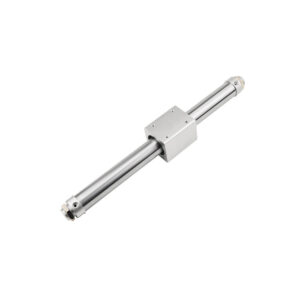
The bore size determines whether the cylinder can deliver sufficient thrust. An undersized bore results in inadequate thrust and prevents equipment from operating properly. Conversely, an oversized bore leads to unnecessary cost waste. For standard selection, a 20% to 30% safety margin should be reserved for the bore diameter.
Reserve extra stroke length. Stroke adjustments are frequently required during maintenance, and minor deviations often occur when commissioning new machinery. It is recommended to add an extra 20 to 30 millimeters of stroke beyond the actual working requirement to avoid the problem of insufficient stroke after procurement.
The brand and material of air tube fittings also affect service life. In humid climates, standard carbon steel fittings tend to rust. Switching to stainless steel or brass variants delivers better durability, especially for workstations near water sources or operating in high-humidity environments.
IV. Real-World Cases: Pitfalls Encountered by Four Factories
A lithium battery equipment factory purchased a batch of 220VAC solenoid valves, while all on-site equipment used 24VDC valves. The entire batch was returned and reordered, delaying delivery by three days.
At a food packaging plant, the flow rate of the pressure regulator was not verified. The cylinders consistently moved too slowly, and technicians spent one week troubleshooting before identifying the fault.
One machinery factory mixed mismatched pneumatic tubes and fittings. After assembly, leaks appeared at more than seven connection points, forcing full disassembly and replacement.
For a tungsten mining equipment manufacturer, the purchased cylinder stroke was 15 millimeters shorter than required during commissioning of new machinery. The whole equipment line waited for new cylinders, pushing back the commissioning schedule by two full days.
These factories share one common issue: procurement staff failed to confirm specifications and model numbers with technical personnel before placing orders.
V. Recommendations for Factory Procurement Teams Pneumatic Components Purchasing Pitfall Avoidance Guide
Confirm three parameters with technical staff before purchasing: voltage, air port thread specification and orifice size.
Purchase complete FRL sets with unified specifications; do not settle for makeshift combinations.
When selecting cylinders and fittings, reserve safety margins for both bore size and stroke length. Verify the specifications of pneumatic tubes and fittings before placing orders.
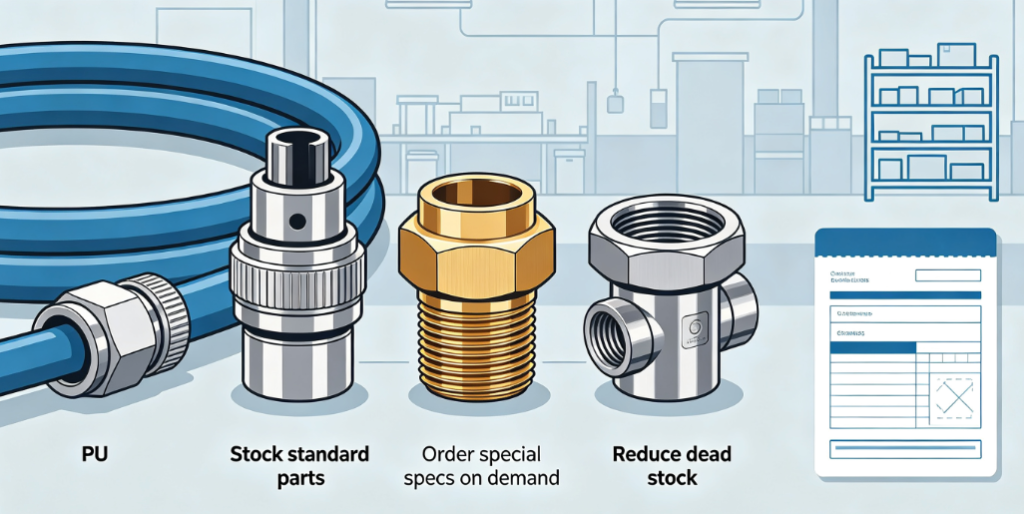
Inventory management matters more than stock preparation itself. Pneumatic components feature diverse models and specifications. Overstocking easily leads to dead inventory. It is more cost-effective to stock frequently used items and purchase uncommon parts on demand.
A pneumatic system may seem simple, yet troubleshooting faults consumes considerable time. Instead of remedying issues after they occur, it is better to select the correct components at the time of purchase.
What are the most troublesome issues with the pneumatic systems in your factory? Feel free to share your thoughts in the comments.
For further technical reference on pneumatic component selection and system optimization, you may review resources from trusted industry platforms:
- Pneumatics Tips: https://www.pneumatictips.com/
- Fluid Power World: https://www.fluidpowerworld.com/

Add comment