

Why Industrial Machinery Prefers Pneumatic Systems
Why Industrial Machinery Prefers Pneumatic Systems Inside factory workshops, roaring robotic arms, high-speed stamping production lines, and precisely positioned fixtures… These industrial machines rarely rely on conventional electricity for power. Instead, they run on invisible compressed air.
From welding tooling in automobile manufacturing and sorting equipment for food processing, to precision assembly of 3C electronic products and heavy-duty mining machinery operations, pneumatic systems hold an irreplaceable position across all sectors.
Beneath this seemingly simple power solution lies industry’s relentless pursuit of outstanding reliability, versatile adaptability and cost efficiency.
First, outstanding durability under extreme working conditions: pneumatic equipment is far more rugged than electric counterparts.
Industrial production environments are often fraught with challenges: high-temperature and high-humidity foundry workshops, dust-choked mine tunnels, chemical production lines filled with corrosive fumes, and work sites flammable or explosive gases and liquids.
Under such harsh conditions, the drawbacks of electric systems become drastically pronounced. Motor windings may short-circuit due to dampness; delicate electronic components break down once coated with dust; sparks generated by brush friction can even trigger explosions.
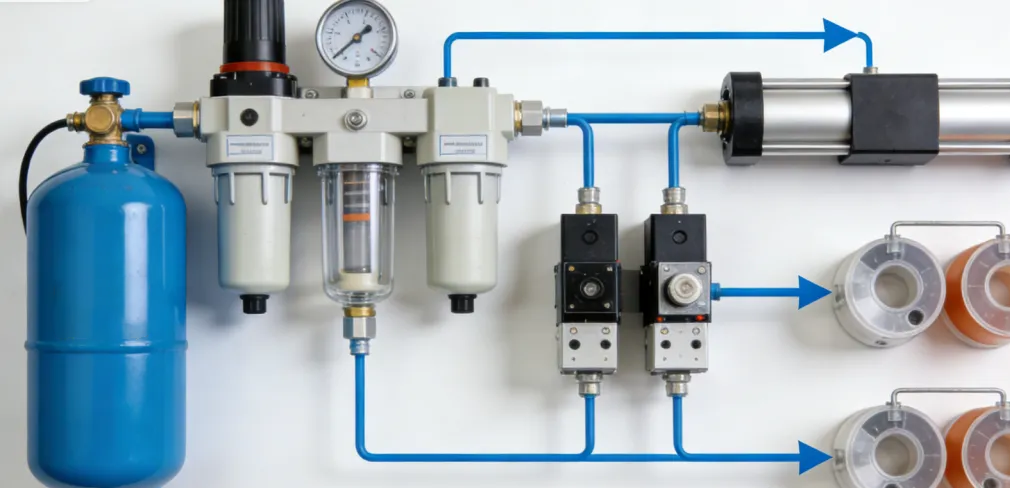
Pneumatic systems rely on compressed air as the working medium and inherently boast exceptional environmental adaptability:
Immune to dust and moisture: The sealing structure of air cylinders effectively blocks external contaminants. Compressed air can also be purified via filters. This eliminates the risk of ventilation openings on electric motors getting clogged.
Intrinsic explosion-proof safety: No electric sparks occur during the energy transmission of compressed air. For hazardous sites such as oil & gas facilities and coal mines, pneumatics serve as the only viable power solution (for instance, the pneumatic auxiliary systems used on coal mine hydraulic supports).
Powerful overload resistance: When mechanical loads surge abruptly, pneumatic actuators (air cylinders included) automatically vent air and lower internal pressure. Unlike electric motors that burn out windings upon stalling, pneumatic units come with built-in overload protection by design.
Next comes the art of balancing cost and efficiency: pneumatic solutions excel at cost-effective industrial operation.
Total Life Cycle Cost (LCC) of industrial equipment stands as the core consideration for equipment selection, and pneumatic systems display distinct advantages in this regard:
Low initial procurement costPneumatic actuators (air cylinders, air motors) adopt a simplistic structure, composed only of core parts including pistons and sealing components. They need no sophisticated control circuits or high-precision sensors. The price of a basic pneumatic system is generally one-third to one-half of that of an electric system with identical specifications.
Easy centralized energy supplyCompressed air is uniformly provided by the factory’s central air compressor station. One high-capacity air compressor can supply air to hundreds of devices concurrently. This arrangement avoids redundant designs that require a separate motor for each piece of equipment.
Simpler maintenance: Pneumatic components feature a high level of standardization, such as ISO-compliant cylinder connection ports. Technicians only need to replace universal spare parts during repairs. In contrast, electric systems often involve customized components including dedicated drivers and encoders, which raise the technical threshold for maintenance work.
Furthermore, pneumatics excel as swift performers in dynamic response: they are inherently suited for high-frequency reciprocating motions.
Numerous industrial processes demand rapid and high-frequency movements, typical examples include:
- Mold closing and opening on stamping machines (2 to 3 cycles per second);
- Pick-and-release cycles of sorting robotic arms (over 60 cycles per minute);
- Yarn traction on textile machinery (millisecond-level response).
- For such applications, pneumatic systems deliver far quicker response speeds than electric alternatives:
- Pneumatic signals travel through air tubing, resulting in delays of merely a few milliseconds;
- Linear motion of cylinders is driven directly by the expansion of compressed air, yielding accelerations exceeding 5 m/s². By comparison, ball screw assemblies driven by conventional electric motors usually register accelerations below 2 m/s²;
- Solenoid valves support switching frequencies up to 100 Hz, whereas electric servo valves generally fall under 50 Hz. This capability enables steady high-speed reciprocating motion with ease.

Lastly, pneumatic systems are not all-purpose solutions, yet they stand out for delivering adequate performance tailored to practical demands.
Why Industrial Machinery Prefers Pneumatic Systems Naturally, pneumatic systems are far from flawless. They suffer from relatively low energy efficiency: the energy conversion efficiency of compressed air hovers between 20% and 30%, considerably lower than the over 80% efficiency of electric motors. In addition, they cannot achieve precise positional control. Standard air cylinders deliver a positioning accuracy of roughly ±1 mm, while servo motors can reach ±0.01 mm. What’s more, pneumatic equipment fails to operate in environments without a compressed air supply.
Yet these limitations perfectly align with the pragmatic logic governing industrial machinery. Most working scenarios do not demand ultra-high precision or supreme energy efficiency; instead, factories prioritize stable and dependable execution of repetitive motions. For instance:
Chuck clamping on machine tools: Only two states are required — clamping and releasing, so pneumatic drive works perfectly well.
Stopper cylinders on conveyor lines: They merely block workpieces at designated positions without the need for precise speed regulation.
Opening and closing of casting molds: These applications demand powerful thrust and rapid movements only, with low precision requirements.
When ultrahigh precision or complex motion control is required, such as joint control for robotic arms and feed axes of CNC machine tools, electric systems — particularly combinations of servo motors and reducers — remain the superior option. Nevertheless, for the vast majority of industrial applications, adequate performance outweighs extreme specifications. This is precisely why pneumatic systems have maintained enduring popularity across the manufacturing sector.
Ultimately, the core principle behind industrial selection lies in matching solutions to actual demands.
Why Industrial Machinery Prefers Pneumatic Systems From pneumatic tools of the steam age to today’s smart factories, compressed air has consistently served as the invisible backbone of industrial power. Its widespread adoption does not signify technological regression; instead, it reflects industries’ rational choice prioritizing reliability, cost efficiency and environmental adaptability. As a seasoned engineer once put it:
“Electric systems are precise surgical scalpels, while pneumatic systems are dependable wrenches. When the task calls for tightening every screw firmly, a wrench is always far more practical than a scalpel.”
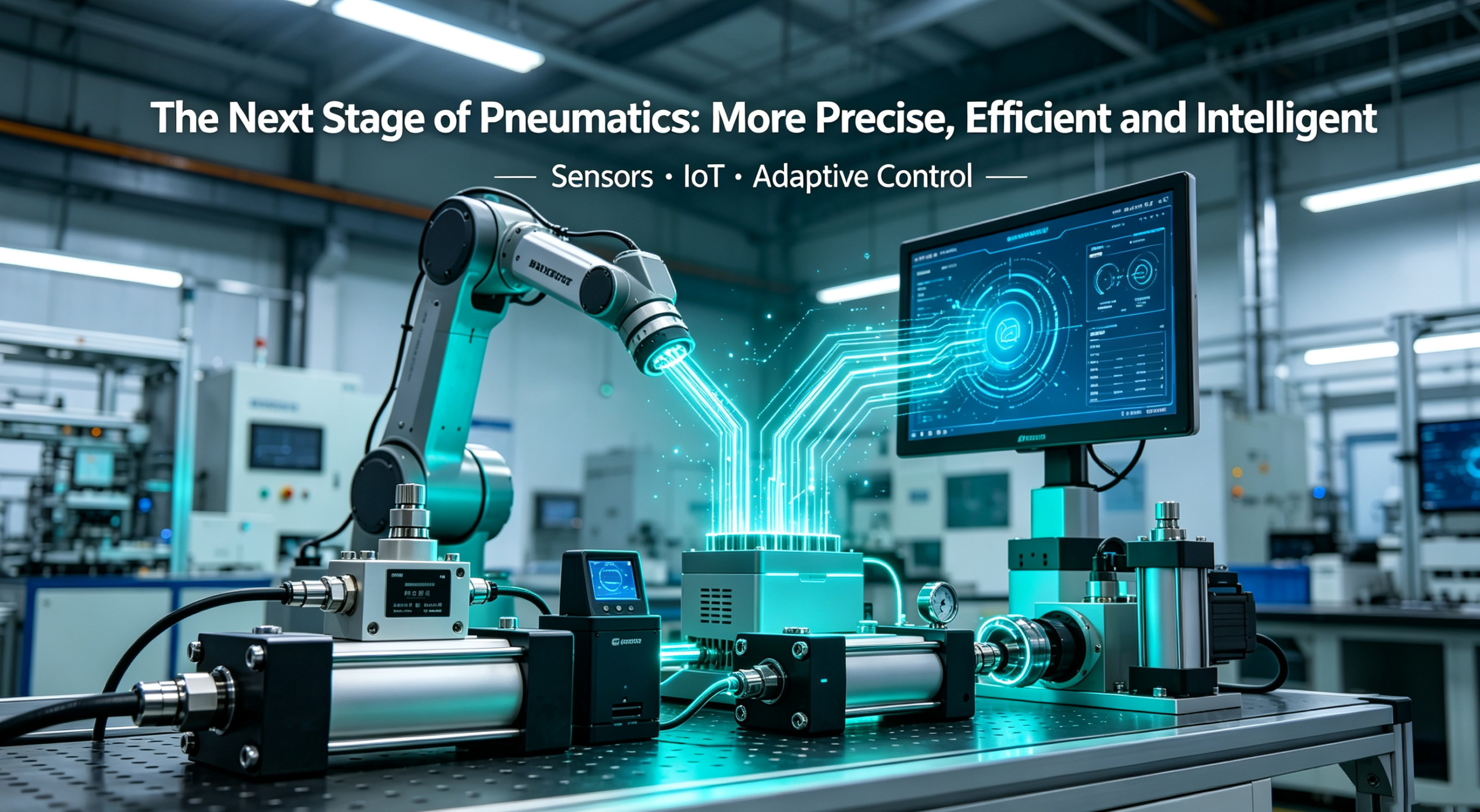
In the future, as pneumatic technology integrates with sensors and the Internet of Things (including intelligent solenoid valves and pressure adaptive systems), pneumatic systems will retain their traditional strengths while further boosting positioning accuracy and energy efficiency. No matter how technology evolves, the selection of power sources for industrial machinery always adheres to one single principle: the optimal solution is the one best suited to the application scenario.
Add comment