

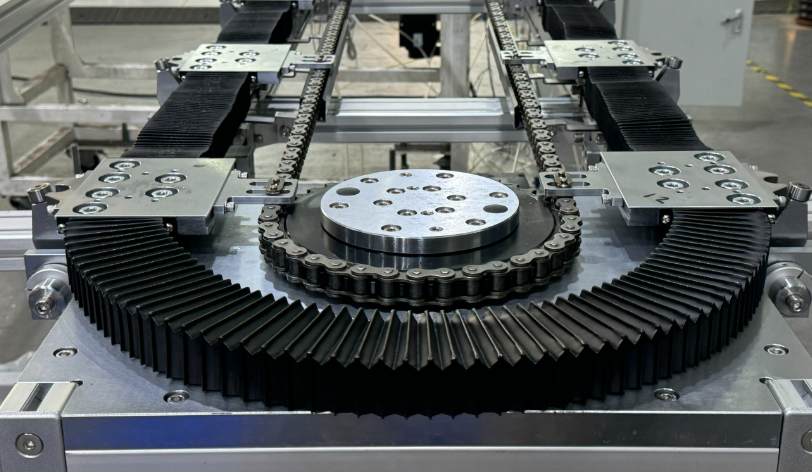
Specifications for Characteristics and Selection of Linear Guide Rails
This paper centers on Specifications for Characteristics and Selection of Linear Guide Rails, systematically sorting out core performance indicators, environmental adaptability standards, maintenance criteria and forward-looking technical trends of linear guide rails with reference to international linear motion standards published on <a href=”https://www.iso.org/standard/42462.html” target=”_blank”>ISO official platform</a>. Combining practical application scenarios such as medical CT equipment and semiconductor precision machinery, it elaborates on key selection requirements including dustproof grade, non-magnetized material treatment, low-dust retaining structure and conductive matching with linear motors.
Meanwhile, it introduces vibration monitoring standards and wear early warning indicators of linear guide rails.
it illustrates the complete re-grinding repair process for damaged precision guide rails.
it further analyzes cutting-edge directions covering intelligent linear guide systems, composite material application and maglev guide rail breakthroughs.
Supported by life cycle cost analysis data, this document provides standardized, operable reference specifications for engineers to reasonably complete the characteristic evaluation and model selection of linear guide rails.
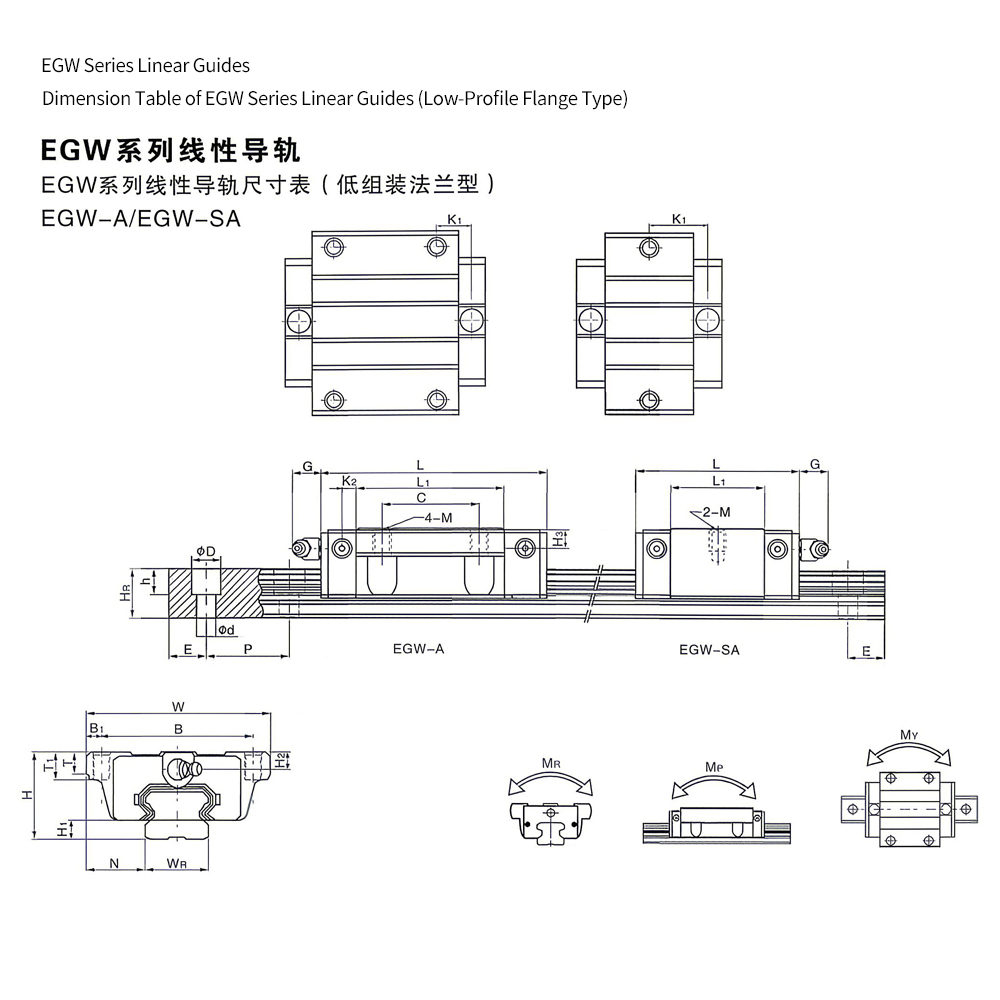
1.Core Features of Linear Guides
1.High Precision Positioning Capability
Adopting a circulating ball or roller structure, firstly, it achieves a repeat positioning accuracy of ±0.002 mm. Furthermore, the optimized preload design thoroughly eliminates internal assembly clearances; additionally, matched high-precision guide rail grinding technology is applied with a surface roughness Ra ≤ 0.1 μm, thereby enabling stable micron-level motion control and ultimately satisfying the stringent movement requirements of high-precision equipment such as lithography machines.
2.Four-way Equal Load Design
Its unique 45° contact angle structure allows the guide rail to bear radial, reverse radial and lateral loads evenly. Taking the 30 mm wide guide rail as an example, its rated dynamic load can exceed 30 kN and static load surpass 50 kN, far outperforming traditional sliding guide rails.
3.Self-lubrication & Long Service Life
It features integrated sealing end caps and grease retainers, paired with special lithium-based grease, delivering a maintenance interval of up to 1000 km of travel. Manufactured from SUJ2 bearing steel via carburizing and quenching (hardness HRC 58–62), it achieves a theoretical service life of over 10,000 hours.
4.Advantages of Modular Installation
Standardized mounting reference surfaces allow a mounting tolerance of ±0.1 mm/m. Leveling can be completed rapidly via an eccentric sleeve adjustment mechanism, cutting installation time by 70% compared with conventional guide rails.

2.Analysis of Key Selection Parameters
1.Selection of Precision Grades
Normal Grade (Grade C): Positioning accuracy ±0.05 mm/m, suitable for packaging machinery.
Precision Grade (Grade P): ±0.01 mm/m, used for CNC machining centers.
Super Precision Grade (Grade SP): ±0.003 mm/m, applied to wafer dicing equipment.
2.Load Calculation Model
Parameters including worktable weight (W), cutting force (Fc), acceleration (a) shall be calculated comprehensively:
Dynamic equivalent load P = (W·a + Fc) · Sfwhere the safety factor Sf ranges from 1.2 to 2.0;
inertial impact shall be additionally considered for high-speed applications.
3.Matching of Speed and Acceleration
Ball Type: Maximum speed 120 m/min, acceleration 0.5 G.
Roller Type: Max speed 80 m/min, acceleration up to 2 G.
Silent linear guides adopt a special retainer design, with noise lower than 55 dB at a speed of 3 m/s.
3.Selection Cases for Typical Application Scenarios
1.5-Axis Machining Center
Recommended Configuration:
Preload Grade: Medium Preload (C3)
Lubrication Method: Centralized Oil-Air Lubrication
Protection: Stainless Steel Scrapers
Actual tests show that with this configuration, position fluctuation is less than 3 μm under a spindle speed of 20,000 rpm.
2.Lithium Battery Stacking Machine
Key Selection Points
Dustproof grade: IP54 or higher
Low-dust fluoroplastic retainers
Conductive treatment of guide rails is required when used with linear motors
3. Medical CT Equipment
Special Requirements
Non-magnetized treatment (material: SUS440C)
Maintenance-free design (fully sealed structure)
Radiation-resistant grease (fluorinated ether oil base)

4.Maintenance and Fault Prevention
1.Vibration Monitoring Standards
Maintenance is required when the vibration value of the guide rail exceeds the following thresholds:
● Low frequency band (<1kHz): Acceleration > 0.5 m/s²
● High frequency band: Effective velocity > 1 mm/s
2.Wear Early Warning Indicators
Indentations over 0.1 mm appear on raceway contact surfaces
Running resistance increases by more than 15%
Grease shows obvious discoloration (Fe content > 100 ppm)
3.Re-grinding Repair Process
For precision linear guides, the following methods can be adopted:
Electrolytic dressing to restore the straightness of guide rails
Laser cladding for repairing local damage
Preload adjustment and running-in test shall be re-conducted after repair.
5.Technical Development Trends
1.Intelligent Linear Guide System
Integrated strain sensors enable real-time monitoring of load distribution, and predictive maintenance can be realized via the IoT platform.
2. Application of Composite Materials
Carbon fiber reinforced polymer (CFRP) guide rails achieve a 40% weight reduction compared with conventional steel guide rails, with the thermal deformation coefficient reduced to 0.5×10⁻⁶/K.
3.Breakthroughs in Maglev Guide Rails
The new generation of non-contact guide rails (such as maglev guide rails) can achieve nanoscale positioning, yet their current cost is approximately 8 to 10 times that of conventional guide rails. Life Cycle Cost (LCC) analysis is recommended for practical selection, comprehensively taking parameters including initial procurement cost, energy consumption and maintenance expenses into consideration. For instance, in semiconductor equipment operating 24/7 continuous production, high-precision guide rails come with a 30% higher upfront cost, yet they can cut annual maintenance costs by over 60%. Multi-objective optimization shall be carried out for specific selection based on equipment working conditions, production cycle time, environmental conditions and other factors.
Specifications for Characteristics and Selection of Linear Guide Rails



Add comment